Residential Siding Repair

Siding Repair: Protecting Your Home's First Line of Defense
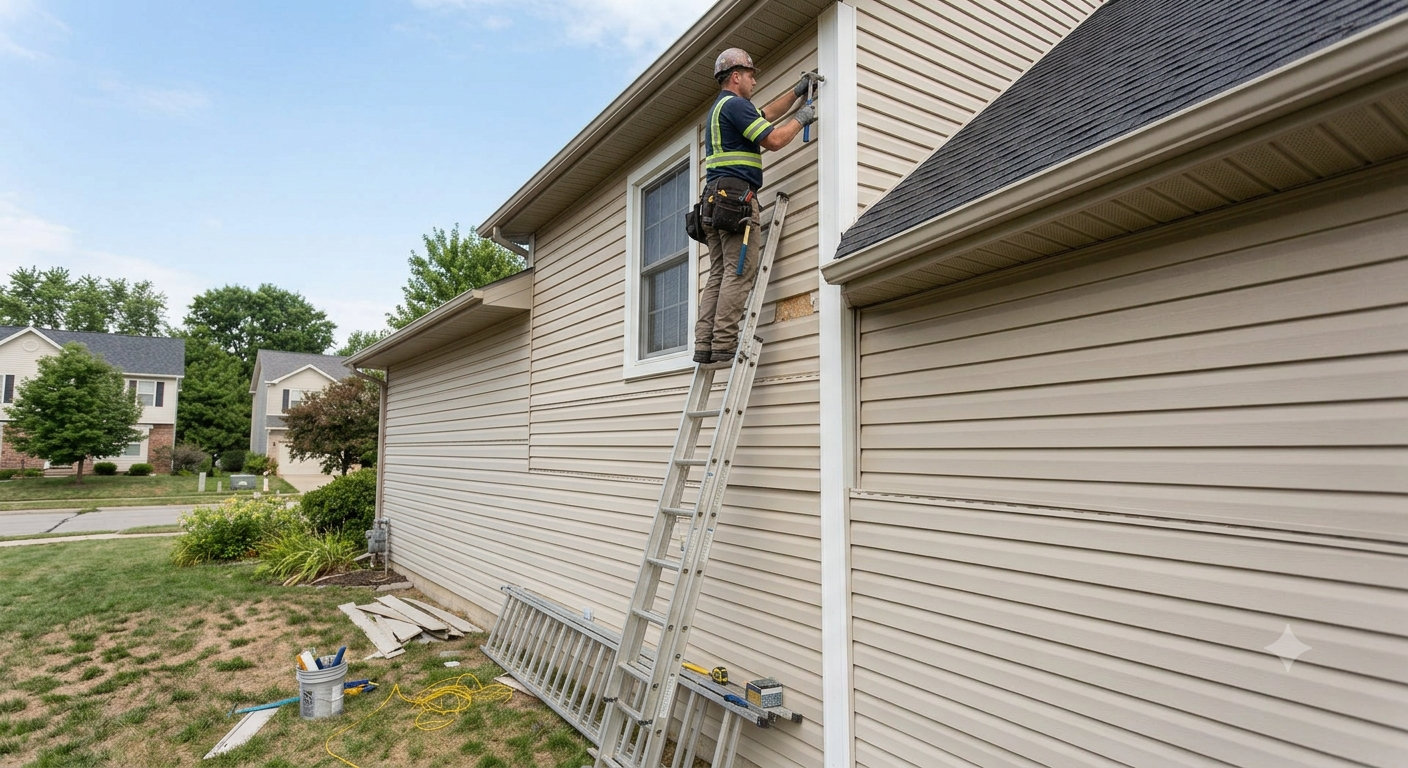
Your home's siding does more than boost curb appeal—it's the primary shield protecting your house from moisture, wind, pests, and temperature extremes. Over time, even high-quality siding can develop cracks, warping, loose panels, or water damage that compromises your home's structural integrity. Professional residential siding repair addresses these issues before they escalate into costly problems like mold growth, insulation damage, or wood rot.
Timely siding repair not only restores your home's aesthetic appeal but also protects your investment by preventing minor issues from becoming major renovations. Whether you have vinyl, wood, fiber cement, or aluminum siding, professional repair services can match existing materials seamlessly, ensuring a uniform appearance while reinforcing weatherproofing.
Don't Wait For Small Cracks to Become Expensive Headaches
FAQs About Siding Repair
-
Minor issues like small cracks, a few loose panels, or isolated water stains usually only require a minor repair. However, if damage is widespread, siding is over 20 years old, or you notice soft spots (indicating rot) across multiple areas, replacement may be more cost-effective long-term. A professional inspection can help determine the right approach for your situation.
-
Look for warping, cracking, bubbling, or fading panels, as well as peeling paint or wallpaper indoors (a sign of moisture getting in). Increased energy bills, mold or mildew growth, and visible gaps between panels are also red flags that shouldn't be ignored.
-
Costs vary based on the extent of damage, material type, and labor in your area. Minor repairs like patching a small section may cost a few hundred dollars, while more extensive repairs involving multiple panels or underlying structural issues will run higher. Getting a free estimate is the best way to know your specific cost.
-
In most cases, yes. Experienced contractors keep a range of materials and colors on hand and can source close matches for common siding types like vinyl, wood, and fiber cement. Minor color variation may occur with older siding due to sun fading, but this is usually minimal.
-
Most residential siding repairs are completed within 1-3 days, depending on the scope of work. Larger repairs involving structural damage or extensive sections may take longer. Your contractor should provide a clear timeline during your initial consultation.
Key Benefits of Siding Inspection & Repair:
Prevents Costly Water Damage - Small cracks or gaps in siding let moisture seep into your walls, leading to rot, mold, and structural damage that's far more expensive to fix than the siding itself.
Improves Energy Efficiency - Damaged siding often has gaps that let air escape, forcing your heating and cooling system to work harder. Repairs help seal these leaks, lowering your utility bills.
Protects Your Home's Structural Integrity - Siding acts as a barrier against wind, rain, and pests. Left unrepaired, damage can spread to the underlying sheathing and framing, compromising the whole structure.
Boosts Curb Appeal and Property Value - Cracked, faded, or warped siding makes a home look neglected. Fresh, well-maintained siding significantly improves first impressions and resale value.
Prevents Pest Infestations - Gaps and holes in damaged siding create easy entry points for insects, rodents, and other pests looking for shelter.
Extends the Lifespan of Your Siding - Addressing minor issues early—rather than waiting for them to worsen—helps you avoid premature full replacement, saving money over time.
Identifies Hidden Problems Early - A professional inspection often catches issues you can't see from the ground, like damage behind panels or moisture trapped in walls, before they become major repairs.
Schedule your free estimate now.