Floor Leveling

Floor Leveling: Restoring Safety and Stability to Your Home
Uneven or sagging floors are more than just a cosmetic nuisance—they're often a sign of underlying structural issues that can worsen over time. Common causes include foundation settling, moisture damage, deteriorating floor joists, or soil shifting beneath your home. Left unaddressed, uneven floors can lead to sticking doors, cracked walls, and even more serious structural damage. Floor leveling corrects these problems, restoring both the safety and value of your home.
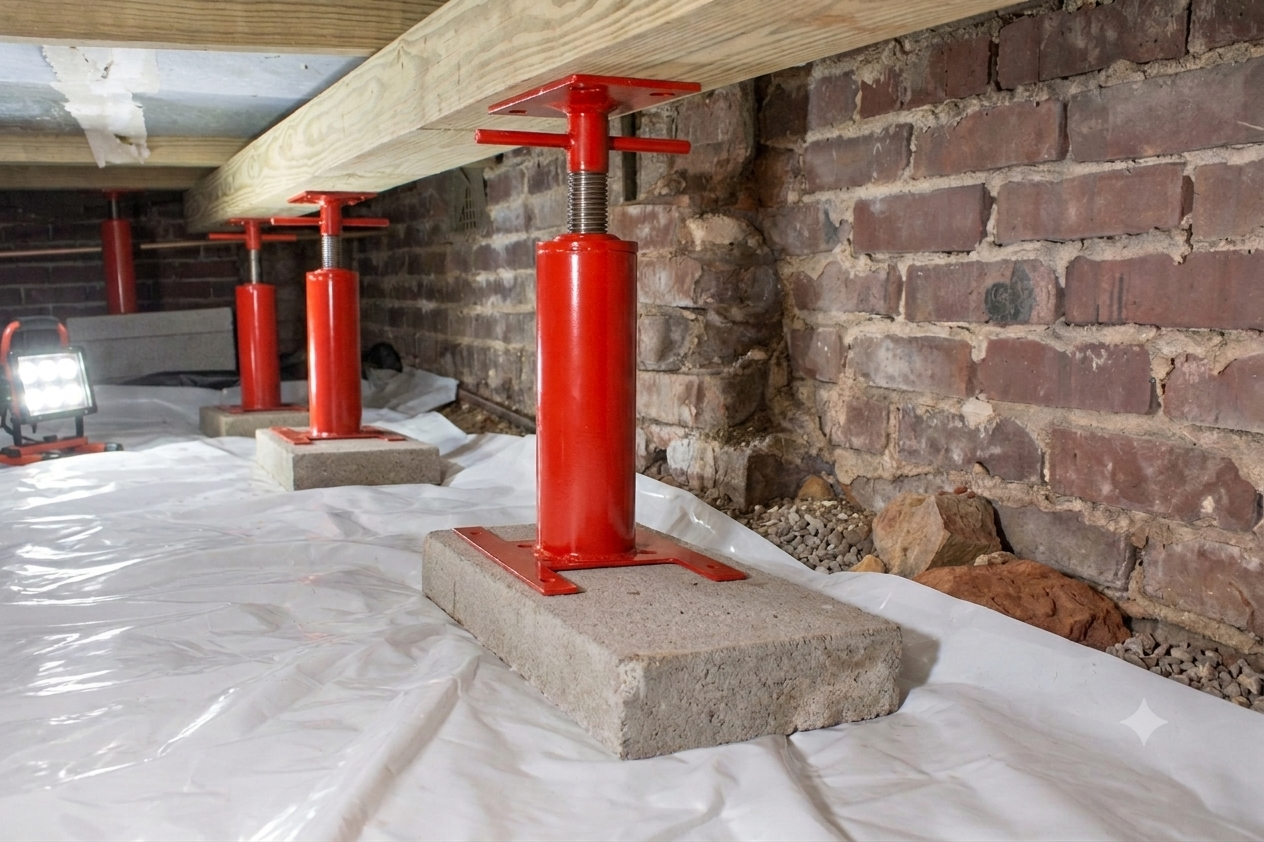
Professional floor leveling typically involves reinforcing or replacing damaged floor joists, installing support beams or jacks, and adjusting the foundation to bring floors back to a stable, even surface. This process not only improves the look and feel of your home but also prevents further deterioration.
Because Your Floors Shouldn’t Have A Mind of Their Own
-
Common signs include doors or windows that stick or won't close properly, visible slopes when you place a ball on the floor and watch it roll, cracks in walls or floors, gaps between the floor and baseboards, or a noticeable "bounce" when walking across certain areas. If you notice several of these together, it's worth getting an inspection.
-
The most common causes are foundation settling or shifting, water damage or moisture issues beneath the home, deteriorated or undersized floor joists, poor original construction, or soil movement beneath the foundation. Identifying the root cause matters because leveling the floor without addressing the underlying issue can mean the problem returns.
-
Depending on the cause and severity, methods range from installing floor jacks or additional support beams under sagging joists, to using self-leveling compound to fill in low spots, to more involved foundation repair if settling is the root cause. A contractor will typically start with an inspection to identify the cause before recommending the right approach.
-
Some minor cosmetic cracking is possible, especially in drywall, since the structure is shifting back toward level. A reputable contractor will explain what to expect for your specific situation beforehand and can often minimize this with a gradual leveling process rather than doing it all at once.
-
Costs vary widely based on the size of the area, severity of the unevenness, and method used, ranging from a few hundred dollars for a small self-leveling compound job to several thousand for structural support work involving jacks or beams. Timelines can range from a single day for minor fixes to a week or more for significant structural adjustments. Most companies offer a free inspection to give you an accurate estimate.
FAQs About Floor Leveling
Why Leveling Your Floors Matters:
Improved Safety – Reduces tripping hazards and prevents further structural decline
Structural Integrity – Reinforces weakened joists and support beams
Better Functionality – Fixes sticking doors, windows, and uneven furniture placement
Increased Home Value – Level floors are a key factor for buyers and home inspections
Long-Term Cost Savings – Prevents minor issues from becoming major structural repairs
Schedule your free estimate now.