Professional Mold Removal

Mold Removal: Keep You Family Safe & Healthy
Humid summers, damp basements, and poorly ventilated crawlspaces create ideal conditions for mold growth. Once mold takes hold, it spreads quickly—damaging drywall, wood framing, and insulation while releasing spores that can trigger allergies, respiratory issues, and other health concerns for your family. Professional mold removal addresses the problem at its source, not just the surface.
Effective mold removal involves identifying the moisture source, safely removing contaminated materials, treating affected areas, and preventing future growth through improved ventilation and moisture control. This is especially important given the area's humidity levels and frequent seasonal rainfall, which make homes particularly susceptible to hidden mold in basements, attics, and crawlspaces.
Protecting Your Home & Your Family’s Health
-
Small surface mold on a shower tile or windowsill (usually under 10 square feet) can often be handled with regular cleaning products. But if you see mold spreading across a larger area, smell a persistent musty odor without visible growth, or have had recent water damage or flooding, it's likely gone beyond a DIY fix and warrants a professional inspection.
-
Mold needs moisture to grow, so it typically shows up wherever there's excess humidity, leaks, or poor ventilation. Think bathrooms, basements, around windows, under sinks, or near roof leaks. Even a small, unnoticed leak can lead to significant mold growth within 24-48 hours if left unaddressed.
-
Mold exposure affects people differently. Some people experience allergy-like symptoms such as sneezing, coughing, or skin irritation, while those with asthma, respiratory conditions, or weakened immune systems may have more serious reactions. Regardless of symptoms, mold should be removed since it can also damage building materials over time.
-
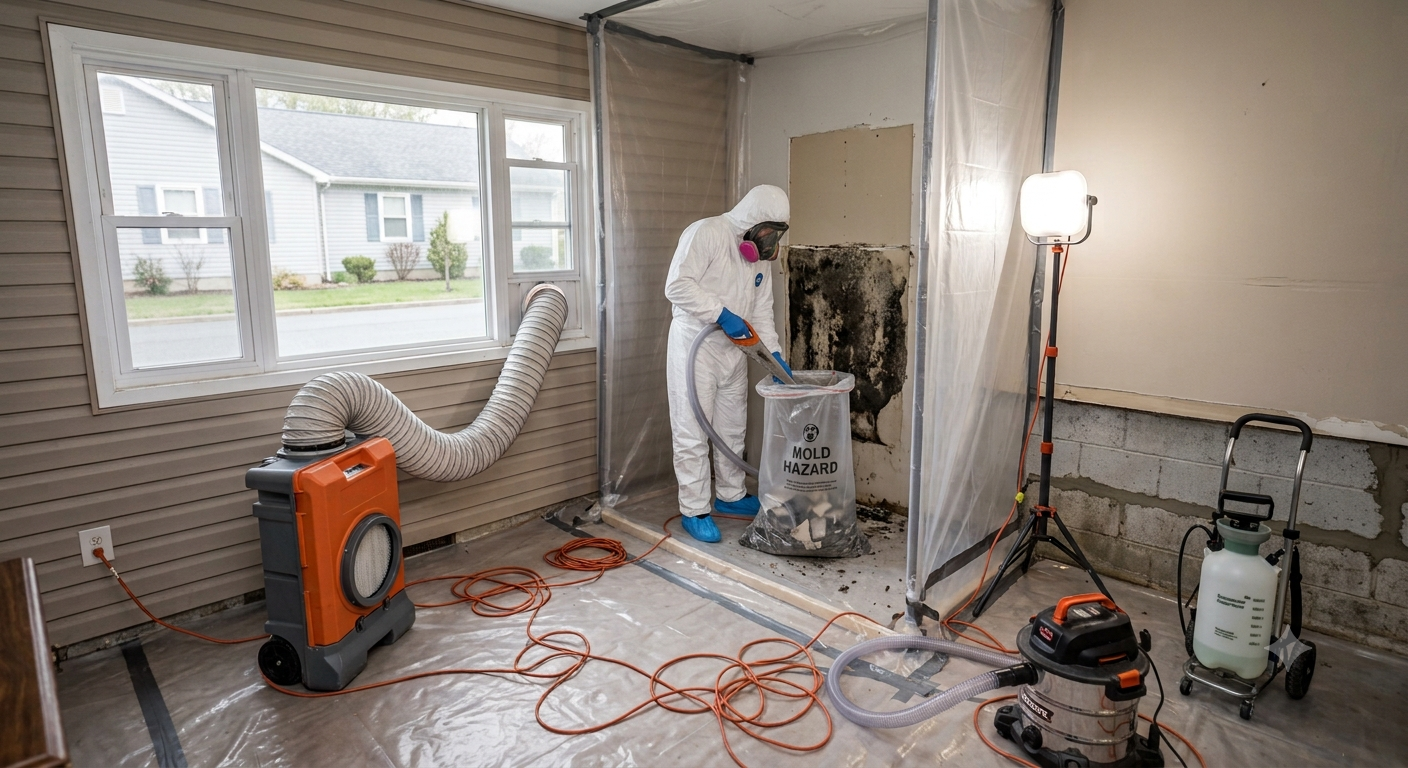
A professional job typically starts with an inspection to identify the source of moisture and extent of growth, followed by containment (to prevent spores from spreading to other areas), removal of affected materials, HEPA vacuuming and air filtration, and treatment of surfaces. Just as important is fixing the underlying moisture issue so the mold doesn't come back.
-
Costs depend on the size of the affected area and severity, ranging from a few hundred dollars for small, contained jobs to several thousand for extensive contamination requiring structural repairs. As long as the moisture source is properly fixed and the area is dried out completely, mold shouldn't return to that spot.
FAQs About Mold Removal
Results You Will See:
Health Protection – Reduces exposure to allergies and respiratory irritants
Structural Preservation – Prevents mold from weakening wood, drywall, and framing
Improved Air Quality – Eliminates musty odors and airborne spores
Long-Term Prevention – Addresses moisture sources to stop mold from returning
Increased Home Value – A mold-free home is more attractive to future buyers
Schedule your free estimate now.